Sum Equals Product
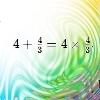
The sum of the numbers 4 and 1 [1/3] is the same as the product of 4 and 1 [1/3]; that is to say 4 + 1 [1/3] = 4 × 1 [1/3]. What other numbers have the sum equal to the product and can this be so for any whole numbers?
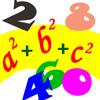

Find some triples of whole numbers a, b and c such that a^2 + b^2 + c^2 is a multiple of 4. Is it necessarily the case that a, b and c must all be even? If so, can you explain why?
Here are three 'tricks' to amaze your friends. But the really clever trick is explaining to them why these 'tricks' are maths not magic. Like all good magicians, you should practice by trying them. Can you explain how they work?
Think of any whole number. Each time you perform a sequence of operations on it, what do you notice about the divisors of your answer?
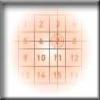
Arrange the numbers 1 to 16 into a 4 by 4 array. Choose a number. Cross out the numbers on the same row and column. Repeat this process. Add up you four numbers. Why do they always add up to 34?
What are the possible dimensions of a rectangular hallway if the number of tiles around the perimeter is exactly half the total number of tiles?
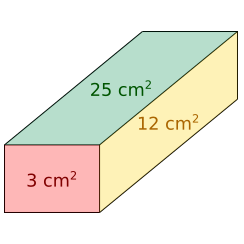
A box has faces with areas 3, 12 and 25 square centimetres. What is the volume of the box?